


Can’t sleep since moving to Spain? Why it happens and what helps
Late dinners, heat, light and noise: why many expats and students sleep worse in Spain, and practical steps to get your sleep back.
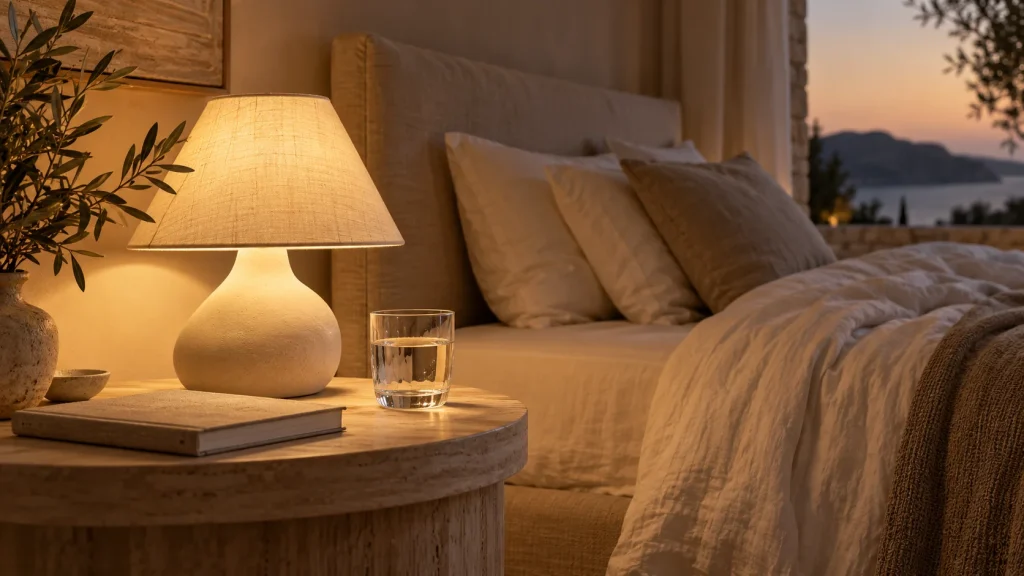
In short. Many people sleep worse during their first months in Spain. Late dinners, a later social rhythm, long evening light, summer heat and street noise all push the body clock later, while work or classes still start early. Most of it improves with a few adjustments: a fixed wake-up time, morning light, an earlier and lighter dinner on weekdays, a cool and quiet bedroom and a wind-down routine. If poor sleep lasts more than a few weeks, see a doctor.
You moved for the sun, the food and the lifestyle. But since you arrived, falling asleep takes longer, you wake up at 3 a.m. or you feel tired all day. You are not imagining it, and you are not alone: changing country changes almost everything your body uses to know when it is time to sleep.
Why sleep gets harder after moving to Spain
Spain lives on a “late” clock
Spain uses Central European Time even though, geographically, most of the country sits closer to the Greenwich meridian. In practice the sun rises and sets later than the clock suggests, and daily life follows it: lunch at two or three, dinner at nine or ten, plans that start when in many countries people are already in bed. Your body clock (the internal rhythm that regulates sleep, appetite and alertness) adapts to light and to meal times, so it slowly drifts later too.
Late, heavy dinners
A big meal shortly before bed, often with wine, is one of the most common reasons expats tell us they sleep badly. Digestion is still busy when you lie down, and alcohol may help you fall asleep but tends to fragment sleep in the second half of the night.
Heat, light and noise
From June to September many Spanish cities stay above 25 °C at night, and a warm bedroom makes it harder to fall and stay asleep. Add evening light until almost ten in summer, terraces and street life below your window, and older flats with thin walls, and the environment works against you.
Stress and a new routine
Paperwork, a new language, a new job or university and missing people at home all keep the mind busy at night. During the first months, many people simply lack the anchors that made their routine automatic.
How to sleep better while living in Spain
- Fix your wake-up time, also at weekends. It is the strongest signal for your body clock, more than your bedtime.
- Get daylight early. Ten to twenty minutes outside in the morning (a walk to the bakery counts) helps you feel sleepy earlier at night.
- Move dinner earlier on weekdays, or keep the late dinner light: more vegetables, fish or eggs, less fried food and big portions. Spanish food makes this easy: a salad, tortilla or grilled fish is very Spanish too.
- Limit alcohol and caffeine. Avoid coffee after mid-afternoon and keep wine for weekends if it affects your sleep.
- Keep the bedroom cool, dark and quiet. Use the persianas (roller shutters) most Spanish homes have, a fan or air conditioning set to a comfortable temperature, and earplugs if the street is noisy.
- Build a wind-down routine of 30 to 60 minutes: dim lights, no work e-mails, a shower, reading or breathing exercises.
- Use the siesta wisely. If you nap, keep it short (20 to 30 minutes) and before 4 p.m., or it may delay your night sleep.
Where nutrition fits in
No supplement replaces the habits above, and none should be presented as a treatment for insomnia. What nutrition can do is make sure you are not short of nutrients involved in the nervous system. Magnesium contributes to the normal functioning of the nervous system and to normal psychological function. Vitamin B6 contributes to the normal functioning of the nervous system and to the reduction of tiredness and fatigue. Both are found in nuts, pulses, wholegrains, fish and green vegetables, all easy to find in any Spanish market.
If you want support as part of your evening routine, LONJEBA Sleep Well combines magnesium bisglycinate and vitamin B6 with L-tryptophan, GABA, valerian and California poppy, with no added melatonin. If your days are also stressful, the Modo Avión duo pairs it with Mood Balance for the morning. Read the label, respect the recommended dose and ask your doctor first if you take medication, are pregnant or breastfeeding.
What about melatonin in Spain?
Many newcomers are surprised that melatonin rules differ from their home country. In Spain, food supplements with melatonin are sold in pharmacies, supermarkets and online up to a set daily amount, while higher doses are medicines that need a prescription. Melatonin is mainly studied for jet lag and shifting the body clock, so if you want to use it, speak to a pharmacist or doctor about timing and dose.
When to see a doctor
See a doctor if you sleep badly most nights for more than three or four weeks, if you snore loudly or stop breathing during sleep, if you feel very sleepy while driving, or if low mood or anxiety are part of the picture. If you are registered with the public health system, start with your GP (médico de cabecera) at your health centre (centro de salud); private insurance usually gives direct access too.
Frequently asked questions
How long does it take to adapt to the Spanish schedule?
It varies, but most people notice their body clock settling within a few weeks once wake-up time, morning light and meal times become regular. Irregular weekends slow the process down.
Is it bad to eat dinner at 10 p.m.?
Not necessarily. What matters most is the size of the meal and how long you leave before going to bed. A light dinner and two hours before lying down is a good rule of thumb.
Why do I wake up in the middle of the night in summer?
Heat is a common reason. Your body needs to cool down to stay asleep. Keep shutters closed during the day, ventilate at night and keep the bedroom as cool as you comfortably can.
Can I buy magnesium in Spanish pharmacies?
Yes. Pharmacies, parapharmacies and many supermarkets sell magnesium in different forms. Check the amount of elemental magnesium per dose and the form (bisglycinate and citrate are usually well tolerated).
Does the siesta help or hurt my night sleep?
A short nap early in the afternoon can help if you slept badly. Long or late naps tend to make it harder to fall asleep at night.
Sources
- European Commission, EU Register of nutrition and health claims (magnesium, vitamin B6). ec.europa.eu
- Sleep Foundation, Bedroom environment and sleep temperature. sleepfoundation.org
- Ebrahim IO et al. Alcohol and sleep I: effects on normal sleep. Alcohol Clin Exp Res, 2013. PubMed
- Roenneberg T et al. Social jetlag and obesity. Curr Biol, 2012. PubMed